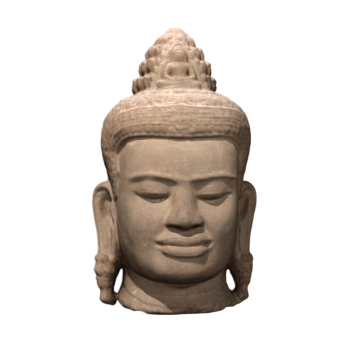
12th Century Stone Guanyin Head

12th Century Stone Guanyin Head

It is clear that the theme of the model is the head of Guanyin carved by stone in the 12th century, "Avalokiteshvara" is Guanyin Bodhisattva (the god symbolizing compassion in Buddhism), "12th C CE" points to its historical period (the 12th century AD, corresponding to the heyday of Buddhist art in Song Dynasty of China or Southeast Asia at the same time), "Stone" emphasizes that the material is stone (presumably sandstone, marble or limestone), and the model restores the religious symbolic significance and artistic style, passing on the solemn and compassionate atmosphere of Buddhist statues.
Iranian Minai Pottery Depicting Sitting King's Bowl

Iranian Minai Pottery Depicting Sitting King's Bowl

Mina' I ware is a very famous ceramic craft in Iran in the 12th century, famous for its exquisite decoration and rich painted patterns. This pottery combines the unique aesthetic of the Islamic world with superb craftsmanship and is used to show social status or religious stories. Minay pottery depicting the bowl of a seated king, 12th century AD, currently in the collection of the Minneapolis Institute of Art.
Hindu Cultural Heritage Shiva and Parvati
Hindu Cultural Heritage Shiva and Parvati

This is a Shiva and Parvati (Uma-Maheshvara) statue, made of sandstone, was created from the 10th to 11th centuries AD, and is currently in the collection of the Minneapolis Art Institute. In South Asian sculpture, Shiva (Shiva) and Parvati (Pārvatī) appear in a variety of image forms and incarnations. In this sculpture, Shiva is depicted as the 'Great God' (Maheshvara), while Parvati appears in the image of 'Uma' (Uma), the daughter of the mountain king.
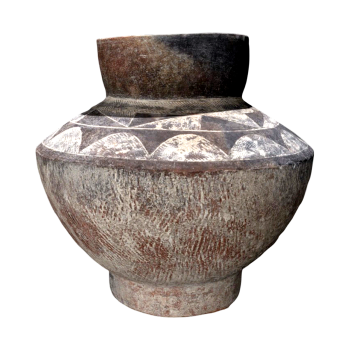
Thailand prehistoric period artifacts Thailand prehistoric pottery jar

Thailand prehistoric period artifacts Thailand prehistoric pottery jar

This clay pot is a typical artifact of Thailand's prehistoric period, reflecting the daily life and craftsmanship of human beings in the Neolithic or Bronze Age at that time. This type of pottery is mainly used to store food, liquid or grain, reflecting the needs and skills of an agricultural society.
South Indian Religious Cultural Heritage Sumerskanda Statue

South Indian Religious Cultural Heritage Sumerskanda Statue

A statue of Sumo Scanda (Somaskanda), dated from about the 14th to 15th centuries AD. "Sumoskanda" is a religious scene in Hindu mythology that depicts the image of Shiva (Shiva) together with the goddess Parvati (Parvati) and their child Skanda (also known as Murugan Murugan). This scene usually symbolizes the harmony and divine strength of the family. In such statues, Shiva and Parvati sit in the center, showing majesty and solemnity, while Skanda stands in the center or near between the two as their children.
Iranian cultural heritage Minai pottery depicting bowls of a woman riding an elephant

Iranian cultural heritage Minai pottery depicting bowls of a woman riding an elephant

This is a Minai pottery "Bowl depicting a woman riding an elephant", created in the 12th to 13th century AD, currently collected at the Minneapolis Institute of Art. Minai pottery, which originated in Iran, is a fine piece of medieval Persian ceramic art and is famous for its exquisite colorful decoration. This bowl depicts the scene of a woman riding on an elephant, showing the high integration of life and art. This work reflects the social style and artistic level of the time, and is an important material evidence for the study of medieval Islamic art and culture.
A pair of Khmer pottery artifacts from early Khmer civilization

A pair of Khmer pottery artifacts from early Khmer civilization

This pottery is one of the representative works of early ceramic art of Khmer culture. It is made of glazed pottery, showing the level of craftsmanship and artistic style at that time. Khmer pottery is usually used in daily life or religious ceremonies, reflecting the exchange and integration of Khmer civilization with surrounding cultures. The design of this pottery is simple and elegant and may be used to hold liquids. It was created from the 1st century BC to the 1st century AD and is currently in the collection of the Minneapolis Art Institute.
Thailand Lanna Kingdom period artifacts Karon vase
Thailand Lanna Kingdom period artifacts Karon vase

The Caron vase is one of the representative works of ceramic art in Thailand's Lanna Kingdom (about 14th to 16th century AD). Archaeologists have discovered about 200 kiln sites in the Karon area, indicating that the area was once a production center for high-temperature pottery. Caron pottery is known for its elegant shape and unique glaze color, which usually takes on a pale gray or rain cloud-like tone. The body of this vase is decorated with patterns of fish and aquatic plants, showing the vivid images of nature, as well as the superb skills of Thai ceramic art. It is currently collected at the Minneapolis Art Institute.
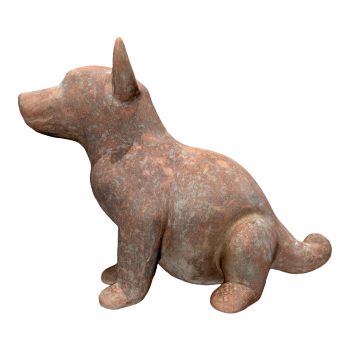
Collie Shepherd (Clay)

Collie Shepherd (Clay)

The pottery Collie, made around 100-300 AD, is currently housed at the Minneapolis Academy of Arts. Scottish Shepherd, also known as Collie Shepherd. The coat is long and shiny, with a considerable amount of hair covering the entire body except for the head and limbs; The upper hair is coarse and dense setae, while the lower hair is soft and dense, with characteristic long whiskers.
Shakyamuni Buddha statue (8th century AD)

Shakyamuni Buddha statue (8th century AD)

The limestone Buddha head of Shakyamuni, dating back to the 8th century AD, is currently housed in the Minneapolis Academy of Arts. The Buddha statue of Shakyamuni is highly compatible with the classical style developed by early sculptors of the Tuora bowl. The face is square, the mouth is wide, the nose is flat, and the hair is curly. Although the artist of the Tara bowl drew inspiration from the idealized sculpture concepts of India, this portrait indicates that the facial features of the local residents quickly integrated into their religious art.
Maitreya Buddha Stele

Maitreya Buddha Stele

The Maitreya Buddha Stele, dating back to 563 AD, is currently housed at the Minneapolis Institute of the Arts.
Ancient Chinese Blue Glazed Pottery Bowl - Minneapolis Institute of the Arts

Ancient Chinese Blue Glazed Pottery Bowl - Minneapolis Institute of the Arts

Ceramic art from the 12th century AD, now collected at the Minneapolis Institute of Art. It is one of the outstanding representatives of ancient Chinese ceramic art, showcasing the exquisite skills of Song Dynasty ceramic art with its unique colors and craftsmanship. Blue glaze, also known as blue color, is a glaze color formed by applying cobalt containing blue pigment to the surface of porcelain and firing it at high temperatures. It became popular in the Song Dynasty and was loved by people for its bright and pure blue color. Not only is it a masterpiece of ancient Chinese ceramic art, but it is also a bridge for cultural exchange between the East and the West. Enable people from all over the world to appreciate the charm of ancient Chinese ceramics and learn about China's long history of ceramic culture
Minneapolis Institute of the Arts Clay Ceramic Tianma
Minneapolis Institute of the Arts Clay Ceramic Tianma

In the Eastern Han Dynasty from the 1st to the 3rd century AD, Chinese ceramic art reached a high level, and one representative work is the ceramic heavenly horse. It is an exquisite ceramic artifact that vividly depicts a galloping horse. It is usually made of fine clay and crafted through meticulous sculpture and painting techniques. The shape of Tianma is lifelike, sculpted according to the actual form and movement of the horse, expressing elegance, freedom, and a sense of power. Its smooth lines, graceful posture, and lifelike details showcase the ceramic artist's superb skills and observation of horses.
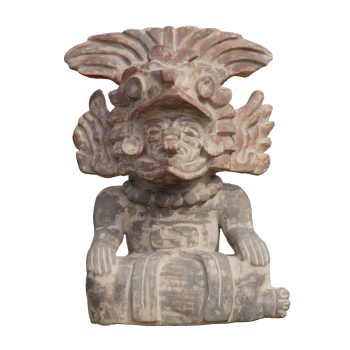
The urn containing the ashes of the Zapotec people
The urn containing the ashes of the Zapotec people

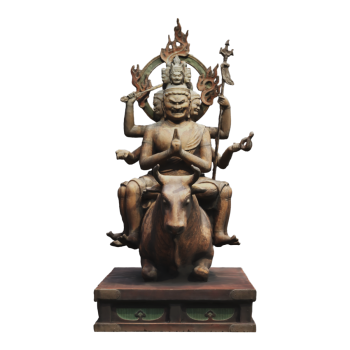
Wooden Carving of King Ming of the Three Dynasties Riding on a Bull

Wooden Carving of King Ming of the Three Dynasties Riding on a Bull

Bronze Pegasus Collected by Minneapolis Institute of the Arts

Bronze Pegasus Collected by Minneapolis Institute of the Arts

When the envoy sent to Central Asia returned to the court, he was amazed by this unique "heavenly horse". This robust animal has a strong back and shoulders, and works very hard, sweating profusely. Emperor Wu of China (141-87 BC) was fascinated by these stories and sent diplomats and later an army to obtain these horses. His interest in these extraordinary horses, as well as the increasingly important role of horses in military operations, largely indicates the popularity of horses in art since the Han Dynasty, especially during the rule of the Wu Kingdom. Bronze horses like this are placed in exquisitely decorated noble tombs.
Bronze square cauldrons from the early Western Zhou Dynasty collected by the Minneapolis Institute of Art

Bronze square cauldrons from the early Western Zhou Dynasty collected by the Minneapolis Institute of Art

Ding is a utensil used by ancient Chinese people in some places to cook and store meat, and is one of the most important bronze ware species in ancient times. The "ding" (cooking vessel) is considered by later generations to be the most representative of supreme power among all bronze vessels.
Bronze Tripod of Early Western Zhou Dynasty Collected by Minneapolis Academy of Arts

Bronze Tripod of Early Western Zhou Dynasty Collected by Minneapolis Academy of Arts

20th century wooden carvings used for sacrificial purposes in Moba villages in Africa
20th century wooden carvings used for sacrificial purposes in Moba villages in Africa

This eroded statue has been preserved outdoors for decades to protect a village in Moba. It represents a female ancestor of the Moba tribe, who was once the focus of worship by villagers to ensure successful hunting and a bountiful harvest. When the owner converted to Christianity or Islam, it was abandoned, which regarded most traditional beliefs and practices as heretics, and is now housed at the Minneapolis Institute of the Arts.
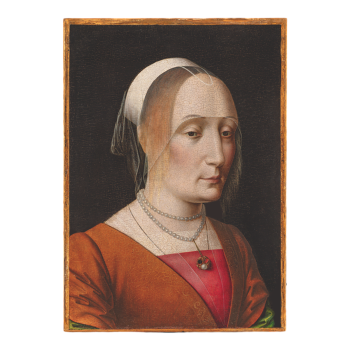
Portrait of a Young Woman by Benedetto Giranda

Portrait of a Young Woman by Benedetto Giranda

The Portrait of a Young Woman by Benedetto Giranda, created in the 15th century AD, is now collected at the Minneapolis Institute of the Arts. Benedeto is the youngest of the Girondayo brothers, who are an established family workshop. Between 1486-1493. His only recorded work is the Nativity of Jesus at the Church of É tampes (Auvergne), where the painter worked for the daughter of Governor Gilbert de Bourbon Montpensier and his wife, Marquis Federico of Mantua, Kiara Gonzaga. This portrait painting is in line with the stylistic features of the signature painting, and there is no doubt that it belongs to Benedetto.
The clay sculpture "Dog ū (Mia)" from the prehistoric Jomon period in Japan
The clay sculpture "Dog ū (Mia)" from the prehistoric Jomon period in Japan

Over the years, archaeologists have discovered many different types of clay sculptures - dog ū - dating back to the prehistoric Jomon period in Japan (1400-800 BC). Various forms have been unearthed in northeastern Japan, some sitting, some standing, some with almost no surface decoration, while others, like this example, are known as the "goggles" type, with unique large eyes adorned with colors and complex carved decorations. The popular theory suggests that they are talismans related to health and childbirth, and after use, they are intentionally destroyed and disposed of. They are now collected at the Minneapolis Institute of the Arts.
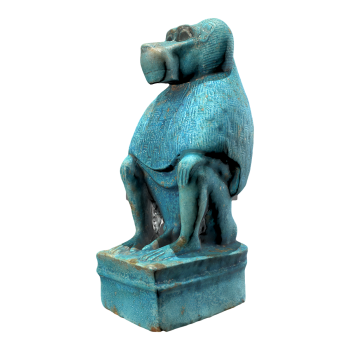
Sculpture of the god Thoth

Sculpture of the god Thoth

Thoth, also translated as Thoth or Thoth, is the god of wisdom and the moon, the local god of Heliopolis, the inventor of words, the instrument of the gods, and is depicted in the Book of the Dead as the Statue Judge. Toth is often depicted as a heron head, with a name meaning and curved mouth reminiscent of a crescent moon. Sometimes, Tochow is also depicted as a baboon holding a crescent moon because baboons are nocturnal and quite intelligent. The model is a Thoth sculpture, made in 7-6 BC, now in the collection of the Minneapolis Institute of Art.